According to this article by Eco-Textile News, although 2008 saw an increase in demand for organic cotton by 33%, global production was left with an 8% surplus. The article cites information released by non-profit Organic Exchange, who also claim that demand for organic cotton will likely result in a 24% increase in 2009 an worry that inventory will remain too high.
The Organic Cotton Market Report will be available in Feb 2009 for review.
This is a one day conference that will bring together experts in ethical fashion, as well as students and tutors, to discuss the current state of the ethical fashion industry, and ways to put ethics into practice. There is no question this will be an excellent conference.
You can read more about this year’s conference and speakers here.
To read a report on last year’s event click here, or to listen to a podcast, click here.
Another interesting article taken from The Independent today, discussed some frustrations in dealing with products that not only fall apart, but are designed to fall apart.
Consumer complaints in the UK surrounding poorly made clothing increased by 22% in 2008, according to this article by The Independent. The article cites a report by Consumer Direct released today. It claims that the biggest consumer complaint amongst females came from ‘defective goods’, at 34%.
According to the article, “[i]n the past five years, with the rise of “value” retailers, the price of clothing has fallen by as much as 25 per cent, while shoppers have bought almost 40 per cent more garments. This suggests fast fashion may be behind the increase in problem items.”
The article also cites statistics from another report, released by Global Cool, stating that female shoppers spent £11 billion on clothes that were never worn last year.
Fast fashion has created systems that cycle through clothing at a speed impossible for consumers to keep up with, and impossible to produce proper value items.
A recent report by The Boston Consulting Group, “Capturing the Green Advantage for Consumer Companies,” surveyed the green consumer purchasing habits of 9,000 shoppers across nine countries.
One section of the report showed that consumers vary their green purchases by product category (see Exhibit 6 in the report). While 14% have bought green before, but are not buying it now and 28% are buying green sometimes, 50% have never bought green. Only 8% of survey participants buy green systematically. As a result, ‘Textiles and clothing’ was listed as the third lowest category.
The report also states the need for companies to keep potential consumers informed with green credentials. These days, what’s in a credential anyway? The report showed that almost survey participants “reported being confused when shopping for green products and uncertain about exactly what being green means, what benefits it provides, and how to tell if a product is green” (18).
The full report is available in PDF here and is worth a read if you are interested in green/ing consumer habits.
If you’re interested in sustainable design, check out the Compostmodern 09 conference. The event will be available as a webcast, so you only have to worry about the long commute to your office, living room, kitchen table, or bed to get there.
Nathan Shedroff/MBA Chair, California College of the Arts (CCA)
Michel Gelobter, John Bielenberg and Pam Dorr/Project M and HERO Housing Resource, Alabama
Emily Pilloton/Project H Design
Dawn Danby/Sustainable Design Program Manager, Autodesk
Emcee: Joel Makower/GreenBiz
What does this have to do with sustainable fashion?
Compostmodern is a design conference dedicated to creating a platform for discussion on sustainable design practices. The interdisciplinary nature of the conference has created a network of information sharing that is relevant to discussions in sustainable fashion/textile design practices, as design is interdisciplinary. Last year, Mark Galabraith, discussed the nature of the sustainable filters used to create outdoor clothing company Nau Clothing, Inc. In his presentation, Galabraith discusses the clothing company as wanting to participate in the industry not as a brand, but rather as a cultural movement.
Some of the design questions he mentions as particularly central to the development of Nau Clothing, Inc. are issues surrounding durability, ease of repair, multi-use, raw material (biodegradability and treatment of animals) and impacts within manufacturing processes. He also speaks of the challenges associated with harmonizing urban sensibility with outdoor performance in a way that questions the ‘aesthetic point for sustainability’.
What I found particularly interesting is the company’s warehouse approach (coupled with a showroom boutique) used to hold merchandise. Although customers are able to take their product home immediately, a 10% is available to customers who are willing to have their garment sent to them. The company also boasts a recycle program (end of life strategy) where old products can be reused to be transformed into new ones (polyester used as a post-consumer material)
The key to Nau Clothing, Inc. is flexible design.
Check out Galabraith, and other speakers from last year’s conference here.
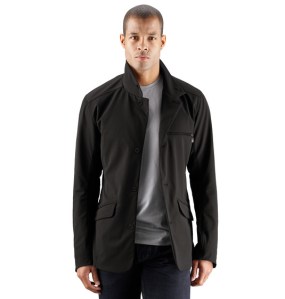
Check out more from Nau Clothing, Inc., like this men’s riding jacket, here.
The “Household Textile Environmental Impact Calculator” wants your closet to think about going on a diet.
The calculator asseses you based on annual water usage, energy usage, use of non-renewable resources, and pollution. Unfortunately the calculator doesn’t account for non conventional fabrics, such as hemp. What is impressive however, is the fact that the calculator takes you through the lifecycle of your garments: purchasing, care, and disposal.
The year is almost up, so Dec. marks a perfect time to start calculating and re-calculating to think about consumption practices for the year ahead. It doesn’t take long to calculate your annual textile environmental impact, and you may be surprised at how easy it is. I don’t know about the accuracy of it all, but one thing is for sure: the exercise promotes the process of reflecting on the lifecycle of your waredrobe.

 Dr Mary F Hanlon